Writing in the Age of AI 2.0: Progress Sets the Direction, but Does Not Guarantee the Result
A protocol for working with several AI models as researcher, critic, and editor without outsourcing the thinking.
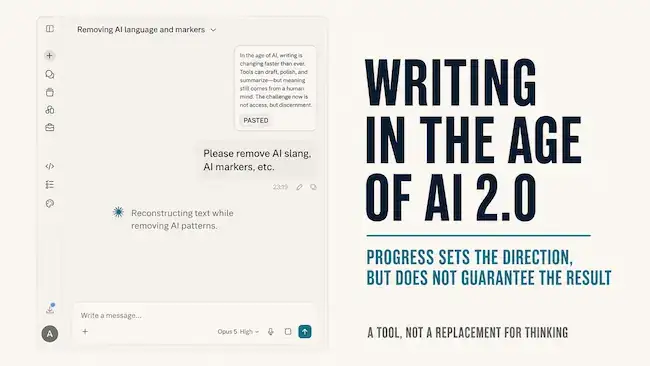
A few months ago I wrote an article about writing in the age of AI. It is still fairly new, but technology moves so fast that my approach has already changed.
Writing in the Age of AI: A Personal EssayNow I use several models when I work on a text. One helps me understand the topic, another looks for weak spots, a third checks the conclusions and offers a different point of view.
My goal, however, is not to build a conveyor belt where an idea goes in and a finished article comes out.
I am an engineer, so I am naturally drawn to simplifying, automating, and improving everything. But automating a process does not mean giving up thinking.
For me the main goal of writing is different: to understand a topic, formulate my own thought, and find out what other people think.
A Huge Library You Can Talk To
Studying a new topic used to take weeks or months. You had to find books, articles, and research, work through the terminology, and understand which opinions even exist.
Today the initial map of a topic can be drawn in a few minutes.
AI is like a huge library you can talk to. It helps explain a complex idea in simple words, find related topics, surface objections, and test a hypothesis from different angles.
But the librarian makes mistakes sometimes. So important facts, numbers, and conclusions still have to be verified.
Used properly, AI does not replace research. It helps you start faster, go deeper into the question, and make fewer mistakes.
My Protocol for Working on an Article
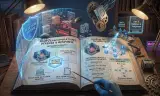
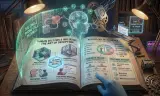
To keep the work from turning into chaotic conversations with different models, I put together a simple protocol.
- Discussing the idea. I explain what I think and which hypothesis I want to test. The AI asks questions, argues, and helps me state the topic more precisely.
- Gathering information. I look for facts, arguments, objections, related ideas, and current sources. It matters to understand not only what supports the hypothesis, but also what could refute it.
- The draft. Based on the discussion and the collected material, a first version of the article appears.
- Manual editing. This is the main and most interesting stage. I rewrite the text, sharpen the thoughts, and check the wording.
- Review. The AI again helps me find grammatical and logical errors, imprecise phrasing, contradictions, and questionable claims.
- Feedback. An article is published not only to deliver a finished thought. It matters to me to hear what other people think, to see the objections, and to notice what I could have missed myself.
This protocol automates the routine, but not the thinking itself.
Does It Matter Whether AI Was Used?
You can still meet a skeptical attitude toward texts created with AI. But that framing itself explains very little by now.
You can write an empty article with a single prompt and publish it immediately. Or you can use AI as a researcher, a critic, and an editor, verify the information several times, rework the text completely, and stand behind every conclusion.
These are completely different processes.
Well known authors already talk openly about working this way. Mo Gawdat is writing the book Alive together with an AI he calls Trixie. By his own account, he uses several models for research, source checking, and calculations, not to stop thinking.
Forbes Australia: AI dystopia, it is already begun, says Mo Gawdat Mo Gawdat: Alive Mo Gawdat: This SpaceThe writer Stephen Marche created the novella Death of an Author with the help of ChatGPT, Cohere, and Sudowrite, and then edited the result many times until the text sounded the way he needed.
Dropbox Blog: Stephen Marche on creating with AI without outsourcing the fun Wired: Death of an Author, an AI book excerptThe Japanese writer Rie Kudan also stated openly that about five percent of her novel, which won the Akutagawa Prize, consisted of phrases generated by ChatGPT.
Euronews: Rie Kudan wins Japan's most prestigious literary prize, then reveals she used ChatGPT Smithsonian Magazine: This award winning Japanese novel was written partly by ChatGPTSo the main question today is no longer whether AI touched the text.
Something else matters more: does the author have a thought of their own, did they understand the topic, did they check the facts, and can they answer for the published result.
AI can accelerate the production of meaningless content. But it also gives one person the capabilities of a small research and editorial team.
Everything depends on whether it is used instead of thinking or to strengthen it.
How do you work with AI when you write? Which stages do you trust it with, and what do you always do yourself? Share your experience. I would be curious to compare approaches and pick up the practices that work.