The Age of Trust
Why knowledge is no longer the main advantage in the AI era.
Artificial intelligence has changed the value of knowledge.
For decades, professional evaluation was often based on what a person knew: algorithms, frameworks, programming languages, and specific tools.
But when knowledge becomes instantly accessible, something else becomes scarce.
The ability to solve problems.
And something even more important: trust.
The World Has Changed
Artificial intelligence has become a vast encyclopedia available to everyone. It helps find information, accelerates learning, takes over part of routine work, and allows people to solve problems that previously required much more time.
This is already a new reality.
And in this reality, the way we evaluate people is beginning to change.
Knowledge Is No Longer the Scarce Resource
In the past, interviews often focused on what a person knew.
- sorting algorithms;
- the syntax of a specific programming language;
- details of particular libraries.
Today, such checks are gradually losing their meaning.
Knowledge is no longer scarce.
The scarce resource is the ability to ask the right questions and achieve results.
AI can help find almost any information. However, it cannot replace a person who understands:
- what problem needs to be solved;
- what questions need to be asked;
- how to verify the result;
- how to bring a solution to a practical outcome.
This is what becomes a real professional skill.
The Shift in How We Evaluate People
The focus of evaluation must shift.
The main question is no longer only what a person already knows. The stronger question is how they solve problems right now.
A strong professional today is someone who:
- can clearly formulate problems;
- can search for solutions;
- can verify results;
- can quickly master new tools.
The Speed of Learning Has Changed
Learning speed has changed dramatically.
An experienced engineer can reach a production-ready level with a new technology within weeks. What once took months or years now happens much faster because information and tools are widely accessible.
Because of this, a person’s past technology stack is no longer the main criterion.
Something else matters far more.
Trust
Whether this person can be trusted.
People tend to exaggerate experience, simplify the history of past projects, and sometimes adjust reality slightly in their favor. This happens in every industry.
Over time, a very simple set of factors comes to the forefront.
- how a person solves problems;
- whether they can be trusted.
These two criteria become fundamental.
And this applies far beyond hiring.
- teams;
- partnerships;
- communities;
- projects;
- any long-term interactions between people.
Trust as Infrastructure
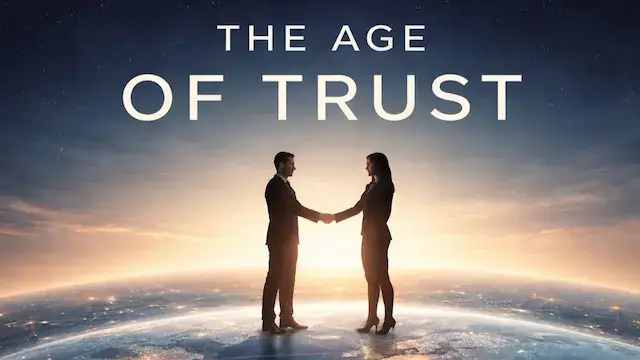
In a world where knowledge is available almost instantly, trust becomes the new infrastructure of interaction.
Recently, I have been thinking a lot about how trust could become more transparent and measurable in the digital world.
There are several ideas about how this could be implemented technologically. It is still too early to reveal the details.
I am working through this idea and will formulate it more clearly soon.
But one thing is already clear.
In a world where knowledge is available almost instantly, what matters most is not only what a person knows. What matters most is whether they can be trusted.
To be continued.