Cybersecurity Movies: Technically Accurate
Films where the tools on screen are real and the break-in follows the same steps it would follow in life.
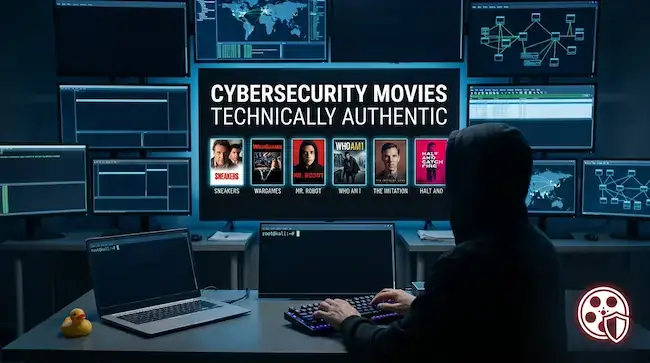
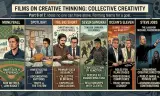
Part one of six. Films you can show an engineer without wincing: the tools on screen are real, and the break-in follows the same steps it would follow in life.
They all land on the same point: the machine gets broken far less often than the person.
Sneakers (1992)
A team of specialists is hired to test banks for weaknesses. They do it with exactly the methods that still work today: forged badges, a conversation with the guard, the contents of the dumpster behind the office.
Red team operations, social engineering, tailgating through a turnstile, an attack on voice biometrics, cryptanalysis, and what happens when strong encryption stops being strong.
WarGames (1983)
A teenager dials a range of phone numbers with a modem looking for other people's machines and finds something else entirely. After this film, the United States got serious about computer crime legislation.
Wardialing, default and guessed passwords, an undocumented developer backdoor, no separation between test and production environments, automated decisions with no human in the loop.
Mr. Robot (2015-2019)
Technically a series, but it sets the accuracy ceiling for this whole list, so it belongs here. On screen: Kali Linux, Metasploit, Wget, John the Ripper, Raspberry Pi, a USB device posing as a keyboard. Working professionals consulted on it, and the terminal is shown in full, with no invented interfaces.
Phishing and pretexting, attacks on industrial climate control systems, physical implants in a network, botnets, encrypting data for ransom, anonymity and its price, insider threat.
Who Am I (2014)
A German story about a group that quickly works out that getting into a protected network is cheaper through a conversation with a person than through the perimeter.
Social engineering in every variety, pulling documents out of the trash, entry through a contractor or a cleaner, the group's own operational security, deanonymization through behavioral traces.
The Imitation Game (2014)
Bletchley Park and the work on Enigma. Cryptanalysis is shown as an engineering discipline: brute force, automation, and the search for a predictable fragment inside a message.
Known-plaintext attack, protocol weakness caused by repeated operator patterns, automating the search, and managing knowledge of a vulnerability: how to use a break without revealing that you have it.
Halt and Catch Fire (2014-2017)
A chronicle of an industry being born: clean-room BIOS cloning, early networks, the first communities and the first attempts to work out who owns user data.
Reverse engineering and its legal limits, the security of dial-up networks, trust in distributed systems, privacy as a product decision.
Next part: based on true events.
The whole series: